EY Wants the Junior Engineer to Arrive Already Above the Work
They want juniors reviewing risk they cannot see yet.

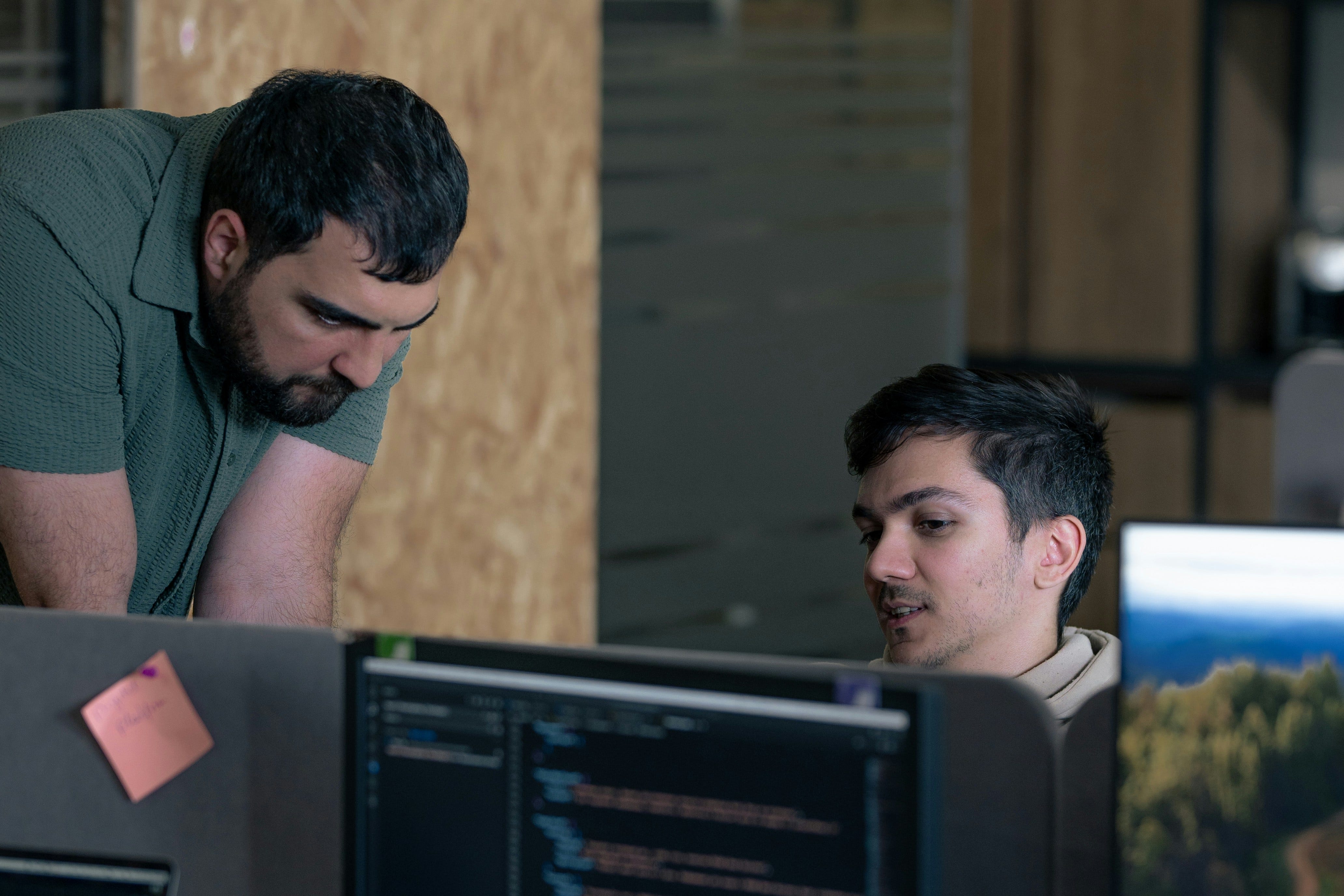
EY has been making the case for a new shape of work in the AI era: fewer people doing routine execution, more people supervising the systems that do it. In its own language, autonomous systems handle routine execution while human leaders focus on direction, boundaries, and relationships. For early-career workers, that logic gets uncomfortable fast.
It is the kind of sentence companies love because it solves several problems at once. It makes automation sound humane. It makes entry-level work sound more strategic. It suggests the dull parts can be handed to the machine while the human steps directly into judgment.
A new engineer arrives. Badge printed, laptop enrolled, calendar already crowded. They are still learning where the documentation lives, which repository matters, and who actually owns the service everyone mentions with nervous politeness.
By the end of the story, they are managing AI output.
It sounds plausible until you put it next to a real first week.
The First Year Has To Touch Real Work
Junior engineering has never been innocent.
Plenty of teams have used junior engineers as a dumping ground for leftover work. Small tickets. Cosmetic changes. Old bugs nobody wanted to explain. Refactors with no context. Months of “learning the codebase” by wandering through tasks too minor to teach anything and too vague to finish with confidence.
That version deserves no nostalgia.
A good first year gives a new engineer work small enough to own, with enough reality inside it to teach them something.
A bug in a settings page can expose a permissions model. A failed test can lead to an old product decision. A tiny API change can reveal how loosely two teams have been coordinating for years. A support ticket can show how far the product has drifted from the language the company uses to describe it.
That kind of work looks minor on a planning board, but it is often the first place a new engineer sees how the system actually behaves.
That is how engineers begin to build judgment. They see the gap between documentation and behavior. They learn which parts of the codebase are safe to change and which ones deserve a slower hand. They notice how an implementation that looks tidy in review can behave strangely once real data touches it.
This work has no romance around it. It still carries the early shape of the craft.
A person cannot supervise a process responsibly without first understanding what the process tends to get wrong.
Supervision Requires Context
The phrase “above the loop” makes supervision sound like a natural promotion from doing the work. The machine handles execution. The person handles oversight.
In software, oversight often demands the deeper context.
A generated change may look credible at first glance. The code is organized. The explanation is fluent. The test suite passes. The pull request has the shape of competence.
Then someone with system context starts reading closely.
The implementation assumes the wrong ownership model. The migration ignores historical data. The generated test proves the happy path while missing the behavior customers rely on. The retry logic looks sensible until it meets a payment operation. The model used the nearest example in the codebase, even though the nearest example was already a compromise.
None of this is obvious to someone new.
A careful junior can still approve the wrong thing when the risk lives outside the diff.
A junior engineer may be intelligent, careful, and motivated, and still miss the part that matters because the part lives outside the local diff. It lives in product history, old incidents, contracts, data shape, operational habits, and all the informal knowledge teams accumulate because the formal version is usually incomplete.
AI makes this more delicate.
The output arrives with confidence. The review now has to inspect both the code and the hidden assumptions behind it.
Faster Output Can Hide Slower Learning
AI can be genuinely useful for junior engineers.
It can explain unfamiliar code. It can draft tests. It can help compare approaches. It can turn a vague error into a few useful hypotheses. It can reduce the waiting time between confusion and the next question.
Used well, it gives juniors more active learning loops.
The risk begins when faster production of artifacts gets mistaken for faster development of judgment.
A junior engineer can now open a larger pull request sooner. The summary reads well. The implementation covers more surface area. The work looks more mature than it would have looked two years ago.
But the person behind it may still be early in the same old way.
They may not yet know why the simpler solution is safer. They may not see the missing operational case. They may not realize the generated code copied a pattern the team has been meaning to remove. They may not know that a green build only says what the build was designed to say.
The senior reviewer then gets a harder problem.
They are reviewing a junior engineer’s work, plus a tool that can produce polished uncertainty at scale.
That takes time. It takes patience. It takes the kind of domain explanation companies rarely count when they calculate productivity gains.
From the outside, the team shipped faster.
Inside, the mentoring burden may have grown.
The Hidden Cost Moves Upward
The fantasy of entry-level AI supervision has a convenient accounting trick inside it.
The junior appears more leveraged. The tool produces more work. The team gets more visible output. The organization sees acceleration.
The risk usually moves to the people with enough context to catch it.
Senior engineers spend more time reviewing generated code. Staff engineers spend more time explaining why a plausible approach violates a product rule. Tech leads spend more time deciding which parts of the AI-assisted diff are useful, which parts are misleading, and which parts will create maintenance debt the junior cannot yet see.
That work is real. It is also easy to undercount.
No one opens a quarterly report with “experienced engineers spent more of their week correcting confident first drafts.” No one celebrates the pull requests that were smaller because someone cut the generated solution back to something the system could safely absorb. No one measures the bugs that never shipped because a reviewer understood an old constraint buried in the business.
AI may reduce some routine work, but it can also push more judgment work onto the people already carrying the review load, the product memory, and the operational risk.
Leadership sees the visible output and concludes the model is working.
Training Is Still the Center
The honest version of this future still needs apprenticeship.
EY’s own early-career material talks about training, development, and growth, because large companies know graduates do not become professionals through access alone. They need structure. They need feedback. They need work sequenced in a way that builds competence, not only deliverables.
AI raises the standard for that structure.
A new engineer now has to learn the system and learn how AI fails inside that system. They need to know when the tool is helping them think and when it is merely filling in blanks with plausible material. They need enough product context to challenge the answer instead of polishing it.
That cannot be reduced to prompt hygiene.
The hard part is knowing when the answer should make you uneasy.
That kind of judgment comes from repeated contact with real consequences. Code reviews. Deployments. Regressions. Customer issues. Production data that refuses to match the neat assumptions in a local test. Small mistakes that become memorable because someone explains them properly instead of treating them as personal failure.
A strong team can make AI part of that learning.
A weak team will use AI to avoid the learning and call the result modernization.
Better Tools Should Bring Juniors Closer
The best version of AI for entry-level engineers brings them deeper into the work.
Let the tool explain the unfamiliar module. Let it generate the first draft of a test. Let it help trace a bug across services. Let it summarize a long thread before the junior asks for help. Let it offer options, then make the engineer defend the choice in review.
That can be powerful.
But the junior still needs ownership of something real. A contained bug. A narrow feature. A production issue with a safe scope. A change that requires them to understand why the system behaves the way it does.
The work should be small enough to support them and real enough to form them.
That balance matters.
Remove too much of the doing, and the person never builds the instincts needed for oversight. Hand them only scraps, and they never grow beyond task completion. Give them AI without mentorship, and they may become fast before they become careful.
The Title Comes Too Early
The line about supervising tasks reveals the corporate appetite clearly.
Companies want new employees to become useful faster. They want the first year to produce more output. They want AI to compress the time between hiring someone and seeing measurable work from them.
I understand the pressure. Engineering teams are expensive. Training is slow. Senior attention is limited. The promise of instant leverage is hard to resist.
But software has a way of charging for skipped steps.
The charge may appear in review time. It may appear in fragile code that looked polished when it landed. It may appear in juniors who can operate tools but struggle to reason about the system without them. It may appear in senior engineers carrying even more invisible responsibility while the organization praises acceleration.
New engineers will supervise AI output. That part is already happening.
The question is whether companies will give them enough real work first.
A junior engineer needs to learn how the system behaves when the easy answer is wrong, when the test is incomplete, when the data is strange, when the product rule lives outside the code, when the clean implementation creates an operational problem three weeks later.
None of that means making juniors suffer through bad work because older engineers once did. It means giving them real contact with the system, enough support to learn from it, and enough responsibility to start building taste.
Let AI help. Let seniors review. Let the first year stay close to the work.
Just do not call them managers before they have had the chance to become engineers.